




Mayd Technologies
Digital marketing in 2026 doesn't look anything like it did even two years ago. The channels have multiplied, customer attention spans have shrunk further, and the tools marketers rely on have gotten smarter — sometimes uncomfortably so. Here's a grounded look at what's actually shifting the needle this year.
AI Is Now the Strategist, Not Just the Assistant
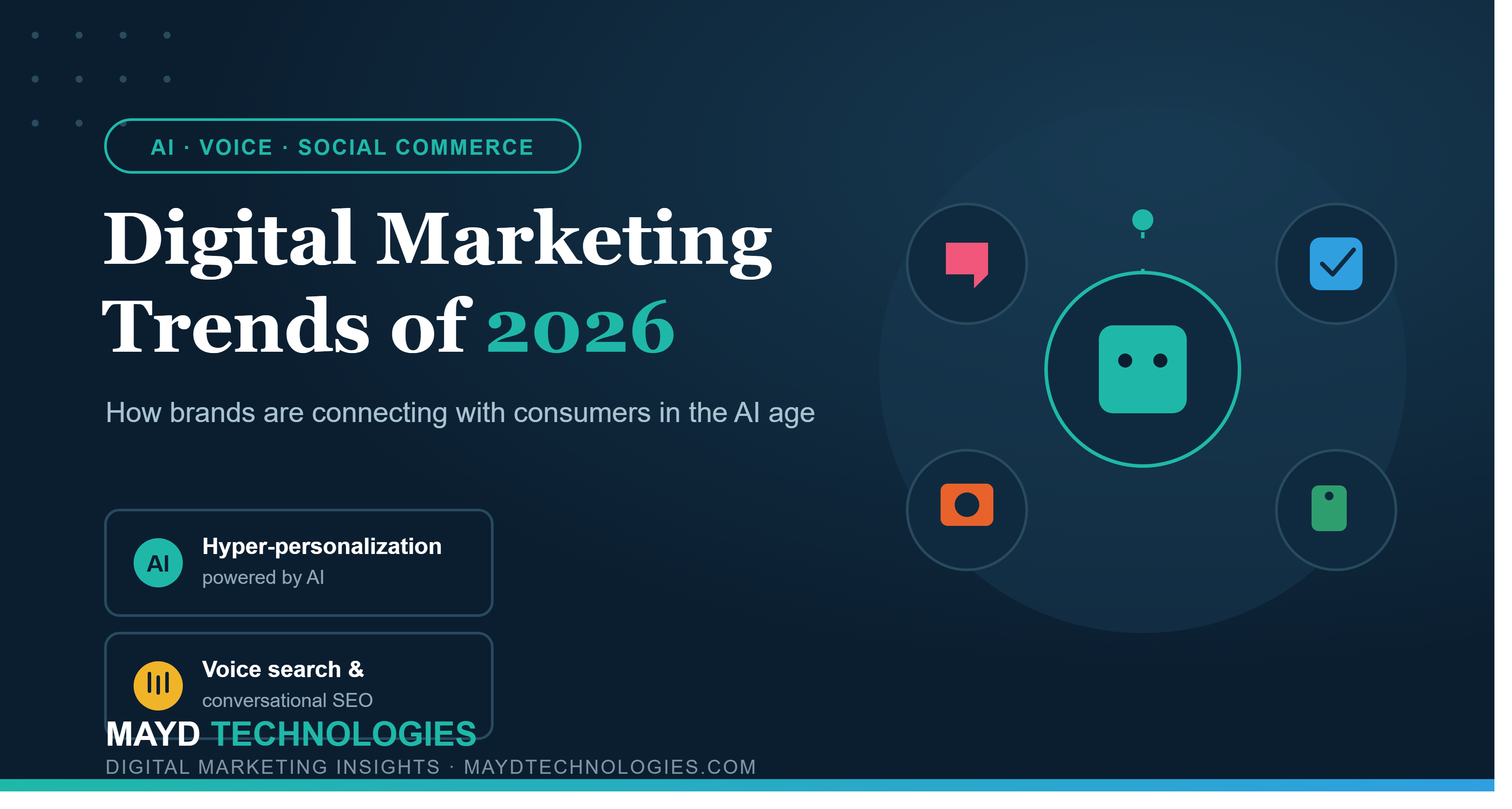
Brands have moved past using AI for basic chatbots or ad copy suggestions. Marketing teams are now feeding AI systems real customer behavior data — purchase history, browsing patterns, even time-of-day preferences — and letting it build individual customer journeys on the fly. The result is campaigns that feel less like broadcasts and more like one-on-one conversations, at a scale no human team could manage alone.
Voice Search Has Changed How We Write
People don't type the way they speak, and that gap has forced a rethink of keyword strategy. Instead of chasing short, clipped keywords, marketers are writing content that answers full questions the way someone would ask them out loud — "what's the best budget phone under 20000" instead of "best budget phone." Smart speakers and voice assistants have made this shift non-negotiable for anyone chasing organic visibility.
Content Has to Do Something, Not Just Say Something
Scrolling past a wall of text is easy. Scrolling past a quiz that tells you your "marketing personality," or an AR filter that lets you preview a product in your own room — that's harder to ignore. Interactive formats are winning because they ask something of the user, and that small effort creates a stronger memory of the brand.
Shopping Never Leaves the App Anymore
The old funnel — see an ad, click through, land on a website, then buy — is collapsing. Instagram, Facebook, and other platforms now let people discover a product and check out without ever leaving the feed. For brands, this means product catalogs, pricing, and checkout flows need to be platform-native, not just website-first.
Ad Fraud Is Pushing Brands Toward Blockchain
Every marketer has dealt with the frustration of ad spend disappearing into fraudulent clicks or bot traffic. Blockchain-based ad verification is gaining ground precisely because it creates a transparent, tamper-proof record of where an ad actually ran and who actually saw it — giving advertisers real accountability for the first time.
Video Is Shorter, Faster, and More Participatory
Long-form video hasn't disappeared, but short-form clips on Reels and TikTok dominate attention right now. What's newer is the rise of shoppable video — clips where a viewer can tap directly on a product and buy it mid-watch. Video isn't just a storytelling tool anymore; it's becoming a storefront.
Conclusion
None of these trends work in isolation. The brands winning in 2026 are the ones combining AI-driven personalization with platform-native selling and content people actually want to interact with — not just consume.